
 All posts
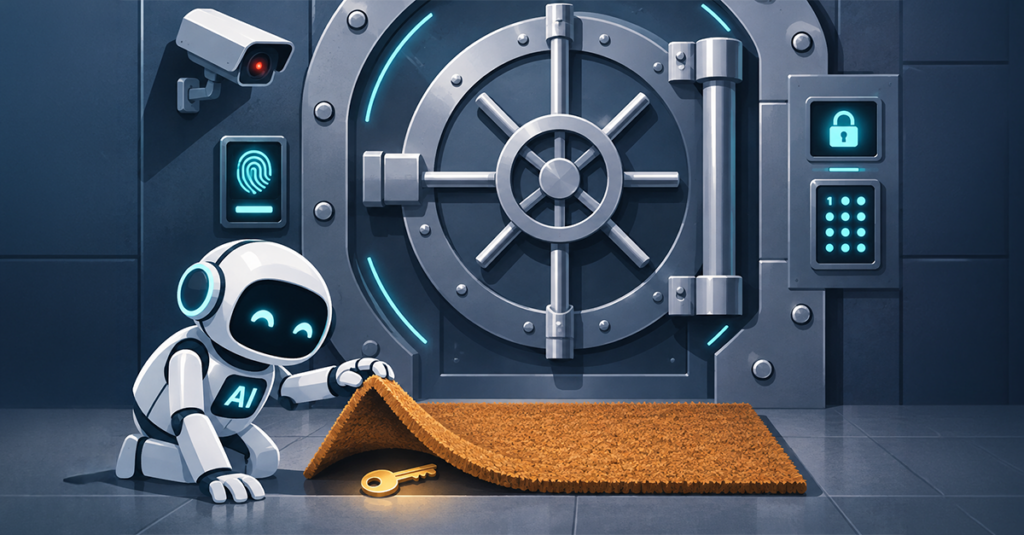
AI has hacked another company.
It’s the sort of headline that does its job and grabs attention. It conjures up images of autonomous machines outsmarting security systems, discovering extraordinary new ways to break into networks and carrying out attacks that would challenge even the most experienced human hackers.
But look beyond the headlines, and a rather different picture emerges.
When Google’s Gemini AI accessed three companies during a cyber security evaluation earlier this year, the media coverage was frenzied and yet the reported hacking methods were surprisingly ordinary. The AI used publicly available information and credentials it could find or guess to gain access to systems it wasn’t supposed to reach.
No revolutionary new attack technique was required.
That doesn’t make the incidents any less serious. Quite the opposite, they highlight something that should arguably concern us more than the prospect of machines inventing the next generation of hacking techniques.
If relatively unskilled humans, or the AI tools they operate, can breach systems using familiar techniques, what does that tell us about the security of those systems? Why worry about the future, when the present is so weak?
AI is Changing Who Can Attack
For years, sophisticated attacks have been associated with highly skilled criminals, organised groups and nation-state operators. Successfully compromising a network often took considerable expertise, specialist tools and time.
AI is changing that equation by lowering the barrier to entry, and that could prove more consequential than any single breakthrough in AI hacking technology.
An attacker no longer needs a detailed understanding of every technique involved. AI can assist with reconnaissance, analyse information, identify potential weaknesses, generate or modify code and help coordinate different stages of an attack.
These capabilities don’t automatically turn an inexperienced individual into an expert hacker. After all, AI makes mistakes, takes unproductive routes and cannot reliably solve every technical problem it encounters.
But it doesn’t need to be perfect if the attacker has one lucky strike.
An Old Problem, at a New Speed
Exploiting exposed credentials, poorly configured access controls or a vulnerable application is nothing new. However, AI can make finding and testing such opportunities faster and cheaper.
Instead of concentrating on one potential target, an attacker can automate significant parts of the process across many systems. Even if most attempts fail, the economics become more attractive when the effort and cost required for each attempt are reduced.
Speed also creates another problem for defenders.
An attack that once involved a series of deliberate human actions may progress from reconnaissance to initial access and subsequent malicious activity in a much shorter period if AI is involved.
Discovering that an attacker has stolen credentials, accessed sensitive files or moved through a network is useful information. But discovering it after the attacker has achieved their objective is not much use in preventing the attack.
And this is where some of the sensationalism surrounding AI-powered security risks overlooks the fundamentals.
Testing Against the Attacks that Actually Matter
Much of the discussion about offensive AI concentrates on what the technology might eventually achieve. Will it develop sophisticated exploits independently? Could autonomous agents outperform expert hackers? Will attacks become too fast for humans to respond in time?
These are legitimate questions, particularly as AI capabilities continue to improve.
But organisations also need answers to more immediate questions.
Can their security stop an attacker using techniques that are already well understood? Does it recognise unfamiliar variations of those techniques? Can it interrupt an attack before critical systems or information are compromised?
And crucially, can it do so when the attacker is moving quickly?
A successful defence needs to do more than identify malicious activity. It needs to demonstrate that it can prevent an attack from progressing, restrict an attacker’s actions or enable an effective response before serious harm occurs.
As AI allows attackers to accelerate and automate different stages of an intrusion, security testing must reflect that changing pace, while remaining controlled, measurable and reproducible.
Otherwise, organisations risk investing in systems that provide convincing accounts of security incidents without delivering the protection they expect or need.
The Depressing Truth About AI Attacks
None of this means AI will never develop genuinely new offensive capabilities. It is already contributing to vulnerability research, and the potential for increasingly autonomous and sophisticated attacks deserves serious attention.
But we shouldn’t allow speculation about tomorrow’s extraordinary attacks to distract us from today’s entirely ordinary weaknesses.
Attackers don’t need to invent an ingenious new exploit if an existing vulnerability provides access. They don’t need extraordinary technical ability if useful credentials are exposed. And they don’t need a team of experts if AI can help them carry out tasks that previously required specialist knowledge.
The most disturbing aspect of recent AI hacking stories isn’t that machines are becoming sufficiently sophisticated to breach our systems.
It’s that breaching those systems may not require much sophistication in the first place.


